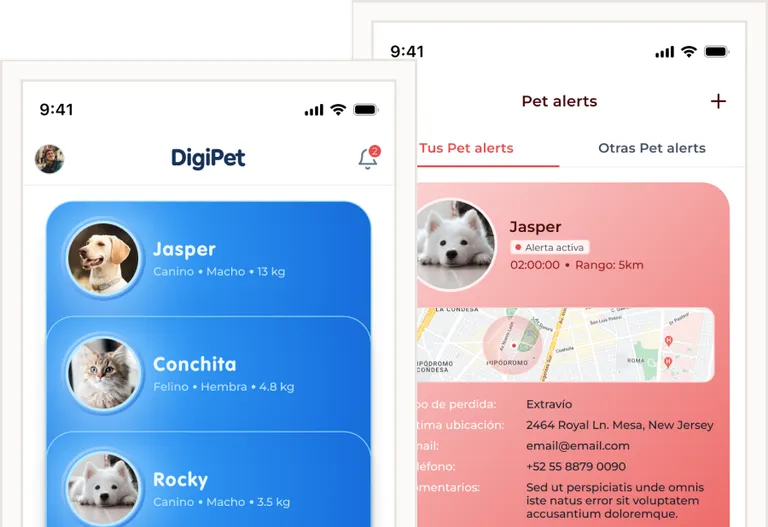
Consumer / Pets
DigiPet
Flutter app for vaccination records, medical history and lost-pet alerts, with subscriptions via in-app purchases.
- Flutter
- Cross-platform
- RevenueCat
- Subscription management
- In-App Purchases
- Recurring payments

PXL EXPERIENCE
We design products validating with real users before writing code. UX research, a design system and usability testing as standard, not as an extra.
What's included
1:1 interviews, contextual observation, analysis of tickets and NPS, quantitative surveys. The CEO's opinion is an input, not the source of truth.
We structure navigation and content around real tasks, not internal org charts.
Low-fidelity diagrams to validate the logic of the flows before investing in high-fidelity visuals.
A component library in Figma with tokens, variants and states, ready for handoff.
Pixel-perfect on desktop, tablet and mobile. Measured micro-interactions and animation.
A Figma prototype that feels like a real product, ready for usability testing and handoff to development.
Moderated or unmoderated sessions with 5 to 8 real users. We iterate before coding, not after.
Specifications, exported tokens, assets, a navigable prototype and Q&A sessions with the engineering team.
Who it's for
We'll help you decide quickly. If we are not the right match, we point you to who is.
Problem
Design treated as decoration at the end of the project is the number one reason digital products do not convert. Teams that design loose screens without researching real users build products that look good in a deck but fail in use. The cost of redesigning after launch is 10 to 100 times the cost of doing it properly from the start.
Products with conversion rates below the industry benchmark
Support swamped with questions the design should have answered
Development teams improvising UI because there is no design system
Product decisions based on opinions rather than user data
Constant redesigns because the first was never validated
Inaccessible products that exclude users and create legal risk
Outcomes
Design done well shows up in the metrics that matter: conversion, retention, NPS and support tickets. Companies that invest in UX research and scalable design systems see a 30 to 80% improvement in key product metrics in the 6 to 12 months after a redesign.
Higher conversion on critical flows (sign-up, checkout, activation)
A measurable reduction in support tickets and abandonment
A design system that speeds up development and reduces inconsistency
Accessible products that widen the addressable market
Product decisions based on evidence rather than internal preference
Design and development working in sync rather than in relays
Process
User research, journey mapping, analysis of current friction and competitive benchmarking.
Information structure and low-fidelity wireframes to validate the logic before investing in visuals.
Building the system (tokens, components, states) and high-fidelity design in Figma.
A navigable prototype, usability testing with real users, and iteration based on the findings.
Specifications, assets, Q&A with engineering and visual QA during the implementation sprint.
Related case studies
Consumer / Pets
Flutter app for vaccination records, medical history and lost-pet alerts, with subscriptions via in-app purchases.
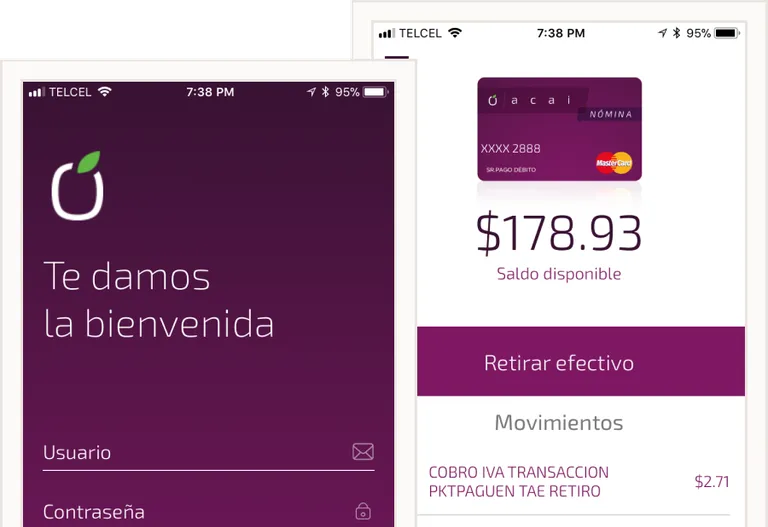
Fintech
Complete payments platform with KYC, reconciliation and a real-time dashboard.
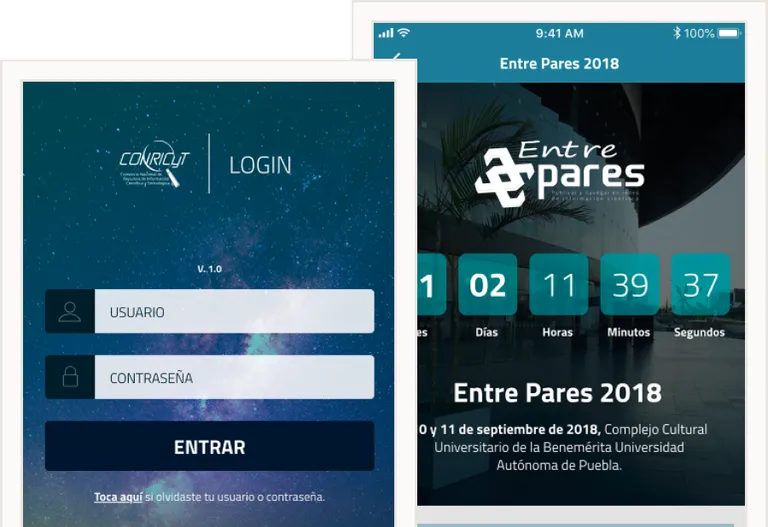
Government
Unified access to academic repositories for 300K+ researchers in Mexico.
Stack | Tools | Standards
Design validated with data.
Frequently asked questions
Yes, we do it all the time. We can lead UX research while your team takes UI, or build a base design system your team extends. The most efficient approach is to define scope and roles at kickoff.
Yes, it's our standard tool for design and component systems.
Yes, with real users before moving to code. It's part of why our design converts and not just looks good.
Both. We can deliver just the design or continue into development with the same team that already knows the product.
It varies depending on how many components and states it covers, and whether it starts from scratch or from an existing base.
Related services
PXL SOFTWARE
PXL Software
Enterprise platforms. Custom SaaS, ERPs, dashboards and APIs with production-grade engineering.
PXL MOBILE
PXL Mobile
iOS and Android apps. Native or cross-platform, ready to scale from the first release.
PXL AUDIT EXPERIENCE
PXL Audit Experience
UX Audit. A review with real users to find friction, drop-offs and conversion opportunities.
A 30-minute call to understand your product and where it can improve.


